
Networking
Retail network transformation — what the pandemic actually changed (and what didn't)
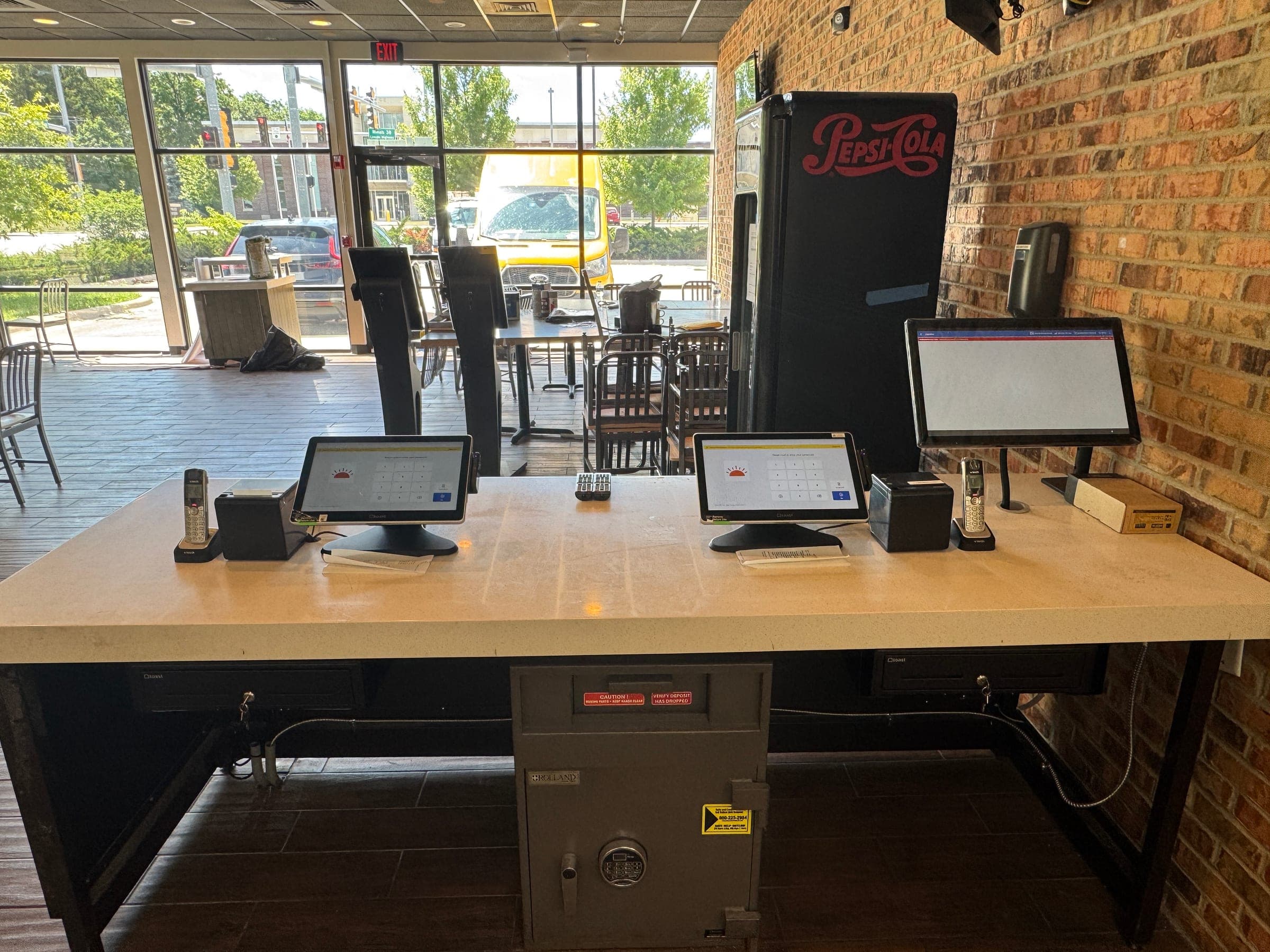
Five years out, the retail network demands look very different from the pre-2020 baseline. Curbside, BOPIS, RFID, app-first checkout, and ML-backed loss prevention each have a network cost. Here's what to redesign for.
The five years since the pandemic permanently changed how retail networks have to be built. The expectations didn't reset. Customers still want to order from the curb, pick up inside, return without a receipt, and check themselves out in 14 seconds. Each of those flows is a network workload — and most retail networks weren't designed for them.
What's actually different on a retail network in 2026?
- Three to five new app/cloud integrations per store (BOPIS pickers, RFID readers, computer-vision LP, mobile checkout, queue analytics) — each pinging a cloud backend constantly.
- Cellular-first failover is now table-stakes. ISP outages are not graceful degradation events; they're hard stops on every modern checkout flow.
- Video moved off NVRs onto cloud and edge architectures. A 16-camera store can push 40+ Mbps continuously upstream — orders of magnitude more than 2019.
- Wi-Fi for the floor staff matters as much as Wi-Fi for guests. Pickers, line-busters, and inventory associates are on it all day.
Segmentation by traffic class — not just by VLAN
The minimum-viable retail network in 2026 has five segments: cardholder, back-of-house, guest, IoT (including cameras and signage), and staff (handhelds, pickers, kiosks). Each segment has its own QoS class. Cardholder is high-priority small packets. Video is high-volume sustained throughput. Guest is rate-limited and isolated from everything else.
What changes the design from 'segmented' to 'tuned' is the QoS layer. Without it, a Saturday-afternoon video upload from the back office can starve the checkout lane. With it, the checkout lane wins every contention. The cost is configuration, not hardware — almost every cloud-managed firewall ships with this capability turned off by default.
SD-WAN with cellular failover — what 'good' looks like in retail
For retail, SD-WAN should hit four marks:
- 01Sub-second automatic failover. The customer in the middle of a tap-to-pay shouldn't even see a hiccup when the primary fiber dies.
- 02Bonded uplinks where bandwidth is the constraint — combine cable + fiber when you can, so the effective ceiling is the sum, not the max.
- 03Static IPs on at least the LTE backup carrier — required by some payment processors for whitelisting.
- 04Central policy push from one console to every store. A pricing rule that changes at HQ should land at every store in under a minute.
Edge compute for video — why local + cloud beats either alone
Cloud-only video architectures look great in demos and break the budget in practice. Pushing 40 Mbps upstream from every store, 24/7, is either expensive bandwidth or low-quality video. Edge compute splits the workload: rapid event detection and short-term recording happen at the store, only flagged events and lower-bitrate streams flow to the cloud.
Modern computer-vision LP works the same way. The model runs at the edge (the camera or a local NUC), only sending alerts and clips when it sees something. This drops upstream bandwidth from 40+ Mbps to 2–4 Mbps and keeps the cloud bill sane while preserving the full forensic value of the video.
Wi-Fi 6 with an actual RF survey
Most legacy retail Wi-Fi was designed for guests holding phones near the front of the store. Today's RF demands are different: handhelds in the aisles, RFID readers in receiving, mobile checkout running in the parking lot. We design from a heat-map walk of the store, not from a contractor's hunch about ceiling tile placement.
Specific markers for a modern Wi-Fi design: AP-per-2,500-square-feet minimum on the sales floor, 5GHz dominant with 2.4 only for legacy IoT, MAC randomization-aware DHCP pools, and at least one outdoor-rated AP if you operate curbside.
What this costs vs. what NOT doing it costs
A modernized retail network for a mid-sized store runs about $5,000–12,000 in hardware plus $200–500/mo in managed services. A modernized fleet of 10 locations is in the $80–150k range up front, $30–60k/year recurring.
What it costs not to modernize: a single ISP outage during peak holiday weekend at one store typically costs $8,000–25,000 in walked-away revenue. A PCI 4.0 audit failure costs more, both in fines and in the carrier's appetite to keep underwriting you. Cyber-insurance premiums for retail with unsegmented networks have roughly doubled since 2023. The math is consistent across the operators we see.
Where to start tomorrow
- 01Inventory your gear. Photograph every IDF/MDF at every store. Note model numbers and firmware ages. Find your EOL count.
- 02Test failover. Pull the primary ISP cable at one store and time how long it takes to recover. If the answer is 'minutes' or 'manual,' that's your first project.
- 03Walk the Wi-Fi. Use a phone app (NetSpot, Wi-Fi Analyzer) to map dead zones. Anywhere coverage drops below -67dBm is a problem for handhelds and a likely complaint area for guests.
- 04Pull your last three months of after-hours alerts. If there are recurring outages at the same store, that's the network telling you where to start.